

What to Expect From Retirement Communities in Sherman, TX
Sherman, TX offers a growing range of retirement communities, from active adult neighborhoods to assisted living. Find costs, amenities,

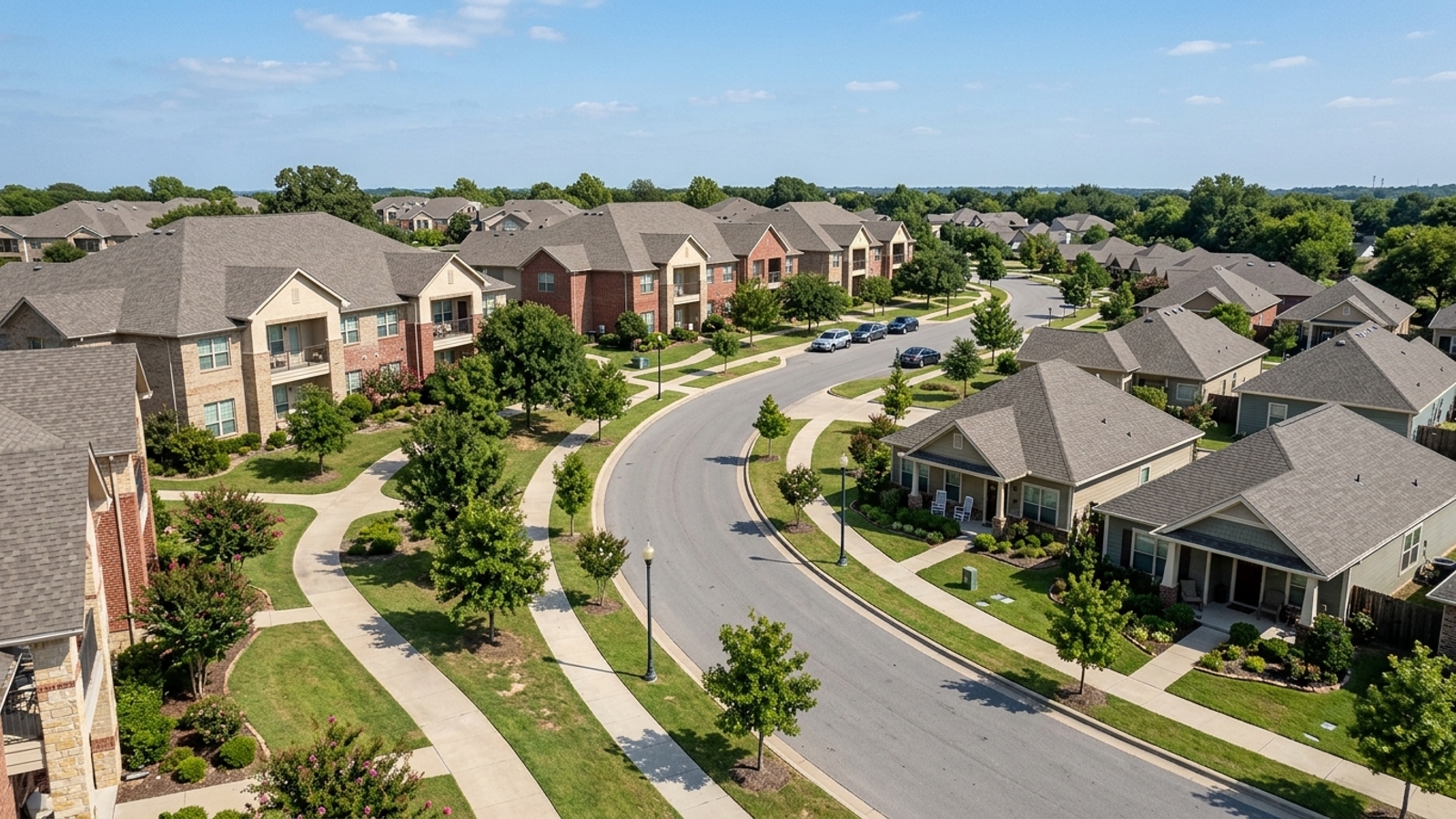
The median home sale price in Sherman, TX sits around $280,000 as of mid-2026. If you're sizing up the local market and weighing the pros and cons of living in Sherman, you'll find a mix of single-family homes, low-maintenance townhomes, and dedicated senior living facilities built around different stages of retirement.
Homes here spend roughly 78 days on the market, which gives you a real window to look around without feeling rushed. That said, knowing what you're looking for matters. The differences between independent living, assisted care, and age-restricted subdivisions across Grayson County are substantial enough that touring the wrong properties wastes everybody's time.
What to Expect From Sherman Senior Living
Grayson County has several housing models aimed at older adults - independent apartments with shared amenities on one end, neighborhoods with specific age minimums on the other. The local inventory of 384 available homes includes properties near the center of town and newer developments spreading outward.
Before you start scheduling tours, settle one question first: do you want a standard neighborhood with an HOA, or a facility that provides meals and daily care? That answer narrows your list considerably.
Types of communities in Sherman
Sherman runs the full range, from 55+ mobile-home parks to continuing care retirement communities (CCRCs). Properties like Park Manor Senior and Woodland Cottages offer distinct layouts and amenity packages for residents looking for a quieter environment. Some developments focus entirely on active lifestyles - fitness centers, social calendars, independent living without any support services attached. Others, like Asher Point Sherman, fold support services directly into the monthly rent for residents who need that extra help.
Who qualifies (the 80/20 age rule)
Many age-restricted neighborhoods operate under the Housing for Older Persons Act (HOPA). The federal law includes what's commonly called the 80/20 rule, which is how these communities maintain their legal status as age-restricted properties.
To stay in compliance, 55+ communities must ensure that at least 80% of occupied units have at least one resident who is 55 or older. The community's HOA enforces this and will check identification during the purchase or leasing process - so don't be surprised when they ask.
Senior Living Options Available Locally
The terminology around senior housing can blur together fast, so it's worth getting clear on what each category actually means before you start calling around. Sherman, TX divides its senior housing into independent living, assisted living, and continuing care - and each one provides a different level of medical support and property maintenance.
Match your current mobility and your honest assessment of future healthcare needs to the property type before you schedule a single tour.
Active adult and independent living
Active adult communities are primarily about low-maintenance real estate. Exterior upkeep is typically covered by an HOA, and you own or rent your home while living completely independently. You use the clubhouse and pool on your own terms.
Independent living facilities are a different animal - closer to an apartment complex or hotel in structure. They bundle utilities, housekeeping, and communal dining into one monthly payment. What they don't provide is medical care or help with daily tasks. If you need that, you're looking at the next category.
Assisted living and continuing care
Assisted living facilities help residents with bathing, medication management, dressing, and similar daily tasks. Staff is on-site around the clock, and regular meals are provided.
Continuing care retirement communities take it a step further by combining independent living, assisted living, and skilled nursing on a single campus. The idea is straightforward: as your health needs change, you move between care levels without having to relocate to an entirely different facility. For a lot of people, that continuity is the whole point.
Local Communities and Neighborhoods
Sherman's residential growth has pushed outward, with specific concentrations of senior housing in North Sherman. The range here is real - subsidized apartments at one end, market-rate luxury rentals at the other.
Buyers looking at the general market will see homes selling for about 97% of their list price. Specialized senior communities work on a different pricing structure altogether, one built around amenities, entry fees, and care levels rather than comparable sales.
Luxury and affordable options
High-end communities in Sherman offer resort-style pools, private transportation, and chef-prepared meals. These properties are built for retirees who want extensive social programming and upgraded finishes.
On the other end, Sherman has low-income senior housing supported by state and federal programs. Texas sets the low-income threshold for a single senior at less than $32,904 a year, which is the number that establishes eligibility for subsidized units and assistance programs. If that's your situation, it's worth knowing the number up front.
Renting versus buying
Buying in a 55+ subdivision builds equity and locks in your housing costs - property taxes and HOA dues aside. With 5.6 months of supply in the broader Sherman market, you're looking at a balanced inventory when shopping for resale homes.
Renting at a place like Villas of Sherman removes the maintenance burden and keeps your options open. If you eventually need to move into assisted living or relocate closer to family, flexibility has real value. It's a personal calculation, and neither answer is wrong.
Cost of 55+ Living in Grayson County
Housing costs in Sherman vary widely depending on whether you're buying a single-family home or moving into a full-service facility. The median monthly HOA fee across Sherman is about $418, though fees in dedicated 55+ communities nationally can reach up to $800 a month.
Work out your monthly budget before you start touring. Entrance fees, base rent, and potential healthcare add-ons can stack up in ways that catch people off guard.
Average rent for senior apartments
The average senior apartment rent in Sherman, TX runs about $1,007 per month. Depending on the building's age, location, and what's included, typical rents range from $831 to $1,869.
Facilities offering additional care services charge more to cover staffing and specialized programming - packages with those extras can push local averages closer to $1,965 per month.
Entrance fees and community dues
Continuing care retirement communities require a substantial upfront entrance fee. Statewide, Texas CCRC entrance fees range from $130,000 to $500,000, followed by monthly fees between $2,250 and $4,800. That's a significant financial commitment, and it warrants a careful read of the contract before you sign anything.
Traditional 55+ neighborhoods use monthly HOA dues instead - covering shared amenities like clubhouses, walking trails, and common-area landscaping. No massive entry check, but the dues are ongoing.
Medicare and state assistance rules
Medicare does not cover assisted living room and board or personal care costs in Texas. The federal program covers short-term skilled nursing for up to 100 days following a qualifying hospital stay, and that's about it.
Texas Medicaid offers the STAR+PLUS Home and Community-Based Services waiver for eligible low-income seniors. It can fund some assisted living services, but it doesn't pay for room and board at a facility. That distinction matters when you're running the numbers.
Evaluating Sherman for Retirement
Sherman functions as a regional hub in North Texas - quieter than the Dallas-Fort Worth metroplex, but with enough local infrastructure that you're not driving an hour for basic errands. Retirees moving here find a mix of historic downtown architecture and newer retail centers.
Assessing any town for retirement really comes down to daily logistics: grocery access, medical infrastructure, what happens when you need to get somewhere in a hurry.
Healthcare access and daily logistics
Sherman residents use Texoma Medical Center for emergency care, routine procedures, and specialized treatments. That's your primary anchor for healthcare access.
The city's layout does require a car for most errands, though some senior living facilities run shuttle services for residents. Access to US 75 makes it straightforward to head south toward Dallas if you need additional medical specialists or airport access.
Best areas for seniors
North Sherman tends to attract retirees looking for newer construction and proximity to retail corridors - a blend of single-family subdivisions and dedicated senior apartments.
If established neighborhoods matter more to you, areas closer to the city center offer mature trees and easy access to Sherman's downtown shops and community events. Different priorities, different part of town. Worth knowing before you start narrowing down addresses.
Weighing the Pros and Cons of Age-Restricted Housing
Moving into a 55+ community or senior living facility changes your daily routine and your financial obligations. That's not a warning - it's just the reality.
What works well for a very social retiree might genuinely frustrate someone who prefers total independence and fewer neighborhood regulations. It's worth thinking that through before you fall in love with a brochure.
Benefits of age-restricted living
Dedicated senior communities provide built-in social networks. Residents connect through organized events, fitness classes, and shared hobbies without having to go looking for them.
These properties also reduce the physical demands of homeownership. Associations and property managers handle exterior maintenance, lawn care, and large repairs. If that sounds appealing, it probably should.
Common downsides and limitations
The most common complaint is the loss of neighborhood diversity. Living among older adults exclusively means fewer daily interactions with younger families and children.
Age-restricted communities also enforce strict covenants and visitor policies - rules about exterior home modifications, pet ownership, and how long younger relatives can stay. These aren't suggestions. Read them before you buy.
How to Tour and Select a Property
No brochure tells you what you actually need to know. A walkthrough reveals maintenance standards, how staff interacts with residents, and the general atmosphere of a place in ways that photographs simply can't capture.
Go in with a list of priorities and take notes during each tour. Comparing three or four facilities from memory is harder than it sounds.
Questions to ask on a tour
Ask management directly about annual fee increases and what the monthly dues actually cover. If you're touring an assisted living facility, ask about the staff-to-resident ratio.
Request a copy of the community's rules and regulations before you leave - especially anything covering visitors and pets. Finding out about a strict visitor policy after you've signed is an unpleasant conversation.
Reviewing contracts and rules
Senior living contracts cover everything from refund policies on entrance fees to the process for transitioning between care levels. Read them carefully, and consider having an attorney look them over before you commit.
For traditional 55+ real estate purchases, check the HOA's financial health - specifically the reserve account. A well-funded reserve means the community can handle future repairs without hitting residents with sudden special assessments. A thin one is a red flag worth asking about.
Frequently Asked Questions
Do both spouses have to be 55 or older to buy a home in a Sherman age-restricted community?
No, the 80/20 rule under the Housing for Older Persons Act only requires that one resident in the household be 55 or older. The community's specific HOA rules will dictate the minimum age for the younger spouse, which is often set at 45 or 50.
What do monthly HOA fees typically cover for retirement neighborhoods in Sherman?
HOA fees generally cover the maintenance of shared amenities like clubhouses and walking trails, as well as common-area landscaping. While Sherman's median HOA fee across all housing types is about $418, 55+ communities nationally can charge up to $800 a month depending on the services provided.
How close are Sherman's 55+ communities to major healthcare facilities like Texoma Medical Center?
Most senior living properties in Sherman are located within a short drive of Texoma Medical Center and other local clinics. Many independent and assisted living facilities also offer scheduled shuttle services to help residents attend medical appointments.
Can adult children or grandchildren live with me in a Sherman active adult community?
It depends on the community's specific covenants, but most 55+ neighborhoods strictly limit how long underage guests can stay. Grandchildren are usually welcome for short visits, but permanent residency for anyone under the community's minimum age limit is prohibited.
How do Grayson County senior property tax exemptions apply when buying in a Sherman 55+ neighborhood?
Grayson County offers a senior property tax exemption for homeowners aged 65 and older on their primary residence. This exemption reduces the home's assessed taxable value, which helps lower annual property tax bills for retirees living in 55+ neighborhoods.
Are there new construction active adult communities currently being built in Sherman, or mostly resale homes?
Sherman offers a mix of both, with newer developments expanding primarily in North Sherman and established resale homes located closer to the city center. Buyers looking at the general market will find about 384 available listings, providing options across different ages of construction.


© The Harrison Group 2025
